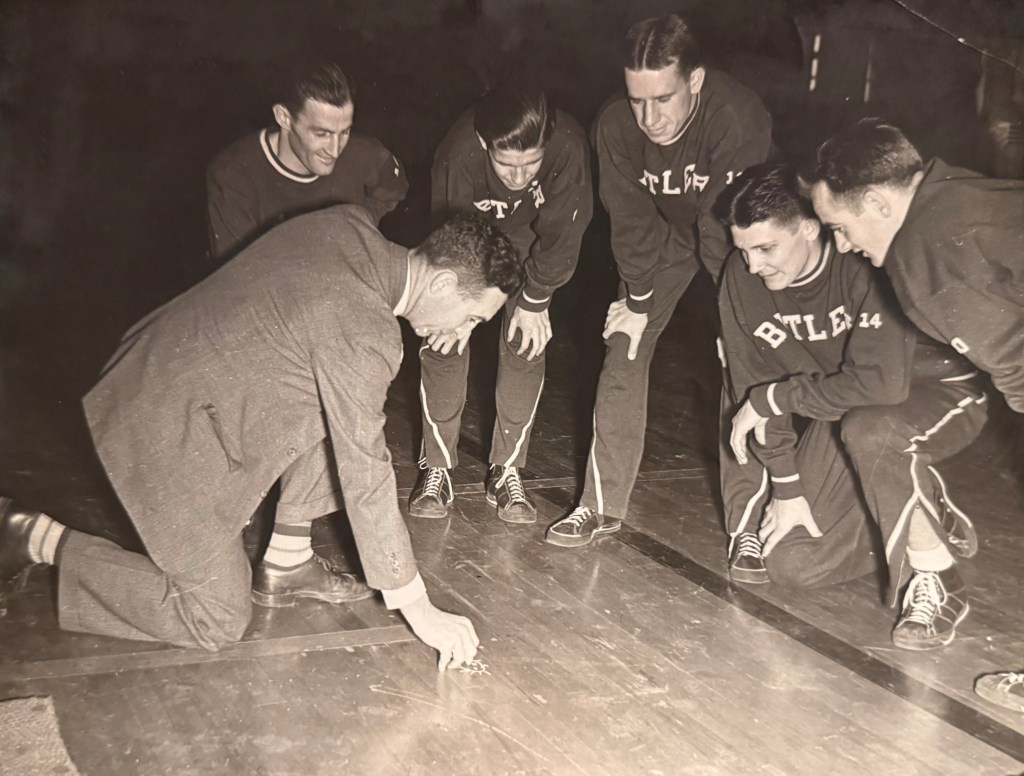
Robert “Bob” Dietz Family Collection
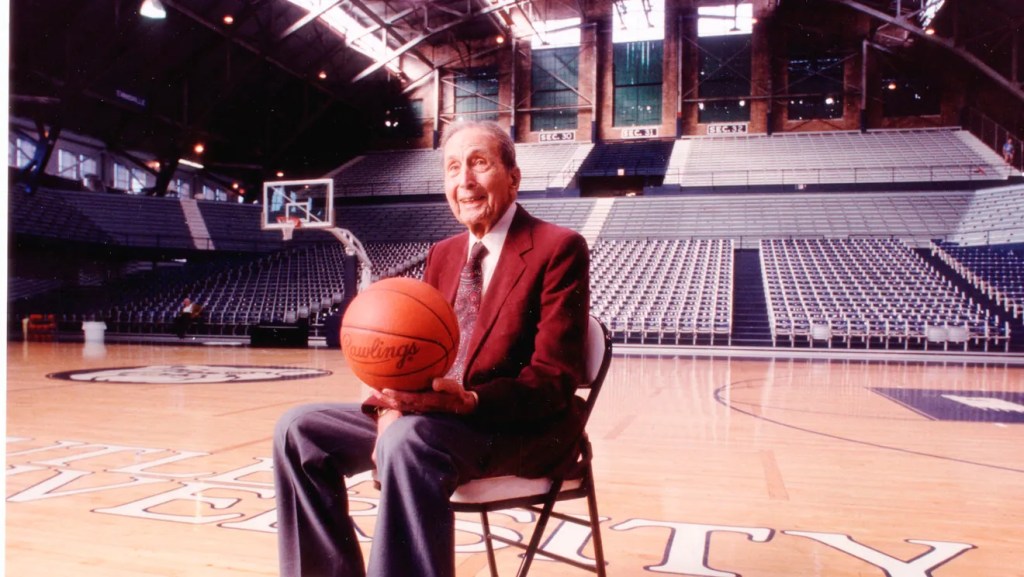
There is no name more synonymous with Butler basketball than Coach Paul D. “Tony” Hinkle. A member of seven Hall of Fames across three sports and 560 basketball wins to his credit, his name has been sprawled across the brick façade of the iconic Fieldhouse in 6 foot high letters since 1966. When he arrived on campus in the spring of 1921, fresh from college, could anyone imagine that over the following 49 years he would coach Butler teams in basketball, baseball and football to a combined 1,060 victories? While also serving as Athletic Director for many of those 49 years?
Loyalty like Tony Hinkle’s is rare today—not just in college athletics but in most lines of work. Despite rumors of prestigious offers, Hinkle’s name was briefly made public one time with another job—as a target by the University of Michigan in 1931. He quickly put the rumors to bed by saying “They’ll (Butler) have to fire me to get rid of me”.
But there was one employer who lured Hinkle away from his beloved Butler–the US Navy during WWII. Which circles back to that one game Tony Hinkle coached against the Bulldogs.
At 9:00 AM on Monday, April 20, 1942, Paul D. Hinkle reported for duty at the Great Lakes Naval Training Station some 35 miles north of downtown Chicago. The Chicagoland area was a bit of a homecoming for Hinkle where he had excelled as an All American in baseball and basketball at the University of Chicago. Most of his childhood had also been spent on the southside of Chicago, graduating from Calumet High School in 1917.
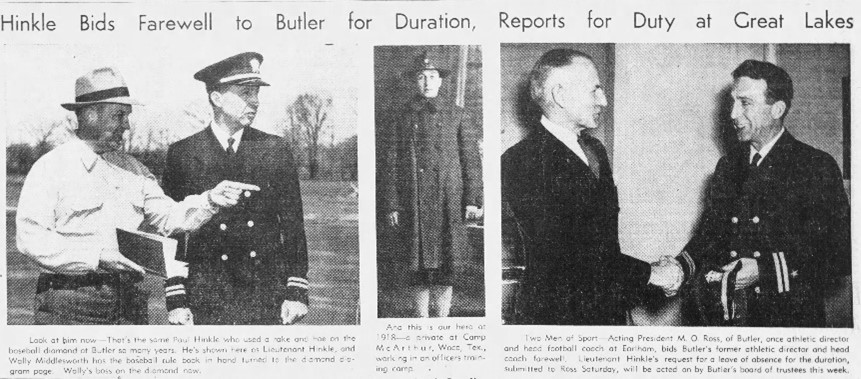
The Indianapolis News, April 20, 1942
Just a month earlier, Hinkle and Butler had announced the long time Bulldog coach would take a month’s leave of absence while seeking commission in the U.S. Navy as a Lieutenant. During that month, Hinkle returned to Butler to assist with the highly regarded Butler Indoor Relays and the finals for the Indiana High School boys’ basketball championship—both at the Fieldhouse which would one day bear his name. His final visit was to inform Butler President M. O. Ross he indeed had received his commission and would join the Navy “for the duration”.
The initial announcement made a splash, as Hinkle had been in Butler’s employ for 21 years, gaining a national reputation as an innovative and hard working coach who made the most of the young men in his charge. (*#1)
The Indianapolis News headline declared “Butler Sacrifices Hinkle for the War Effort” noting the Great Lakes “is being expanded to accommodate 45,000 men who will receive basic recruit training there, and the physical hardness program which is part of the services of such men as Hinkle”.
The night before taking his leave from Butler, Hinkle was the featured speaker at a basketball banquet put on by the Utes, a sophomore men’s honorary. At the dinner, where 26 student athletes were bestowed their Butler “B” letter or class numerals, Coach Hinkle shared his thoughts on what lie ahead for him, giving an uncharacteristically emotional speech.
After being gifted a “B” blanket with 21 stars honoring his 21 years at Butler from the Faculty Athletics Committee, Hinkle rose to speak after hearty applause. He pointed out that he was “joining the greatest team in existence today—the armed forces of the United States”—and that “I am merely applying the principles of loyalty, sacrifice and determination which I have tried to teach the boys.”
According to the Indianapolis Star article, the crowd soon grew silent as Hinkle paused for a few moments, choked with emotion.
“I haven’t made all these victories possible by myself…,” said Hinkle, adding that when the “emergency” is over, “I’ll jump right back to Butler.” (*#2)
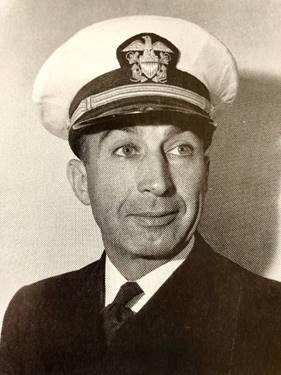
Butler University Archives
When now-Lt. Paul D. Hinkle arrived at the Great Lakes, he was placed in charge of the Bluejacket basketball team. In addition, he was named assistant coach to Mickey Cochrane, the Detroit Tigers former player and manager who would be elected to the Hall of Fame just a few years later. Hinkle was also handed the football head coaching duties just before the start of the season—a spot that was rumored to be filled by Fritz Crisler, Hinkle’s former University of Chicago teammate and the current Athletic Director and football coach at the University of Michigan.
As Hinkle sized up his new basketball roster—which often shifted due to players being reassigned—he found many were familiar to him. Two of the players he knew very well. And two others had played for the Bluejackets when they invaded Butler Fieldhouse the previous season.
That game was on January 3rd, 1942, when Hinkle’s Bulldogs welcomed the Sailors to Butler. The visitors, who were on a five game win streak, quickly took the lead 4-0, but the Bulldogs countered with “two buckets and a charity toss” to overtake the Bluejackets–their last lead of the game. At the half, with the Sailors leading 30-11, the 5,000 spectators on hand stood at attention while 18 college seniors took the oath of allegiance to the United States. They would soon enter naval officer training at one of three schools.
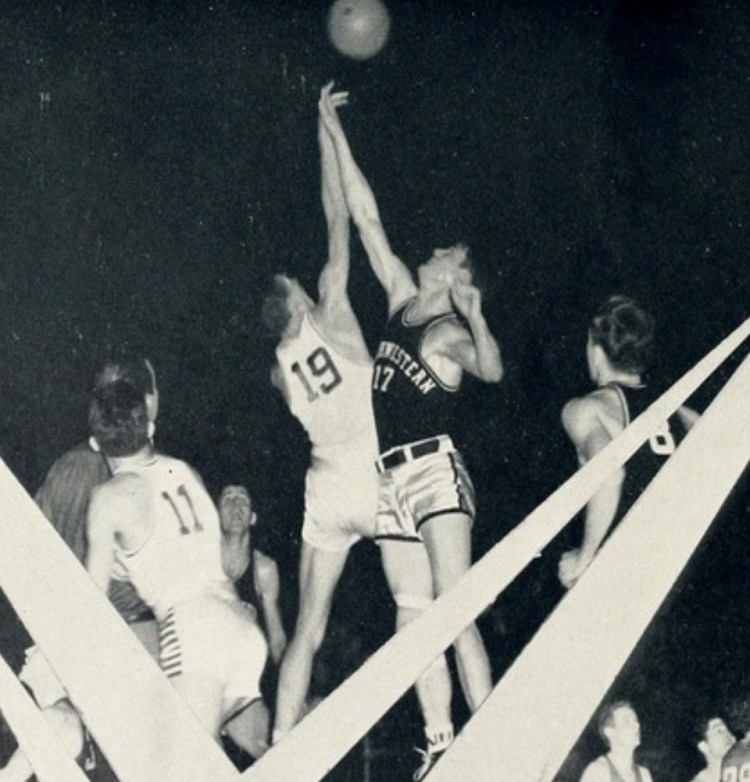
The Butler Drift
The second half started better for Butler as they poured in 5 buckets before the Sailors scored. But Hinkle’s squad could never get closer than 9 points despite impressive scoring by co-captain Wilbur Schumacher who tallied 19 points.
The next day’s headline in the Indianapolis Star summed up the results with “Great Lakes Five Quells Bulldog’s Rally in Second Half to Win 51-40”. The Butler Collegian put a favorable spin on Butler’s efforts, noting “The Bulldogs lost a ball game but they won lots of fans in this battle, which started out as a rout and turned into one of the nip-and-tuckiest scraps in many days.”
Just a week shy of a year later, on December 26, 1942, Lt. Hinkle brought his Sailors’ squad to play the Bulldogs. A great deal of anticipation surrounded the match-up with the Indianapolis Star declaring “Butler-Great Lakes Tilt Tops This Week’s State College Cage Slate” and described special ceremonies around the game.
“Fraternities and sororities on the Butler campus are engaging in competition to sell the largest number tickets” noting one half of the proceeds of the game would be given to the Navy Relief Society. During halftime, parents of Navy active duty members were to be honored along with a musical presentation by the American Legion Drum and Bugle Corps. Navy Commander R.H.G. Matthews, in charge of Recruiting, would “close the program with words of appreciation.”
But no doubt the most highly anticipated event of the evening was the game itself—headlined by beloved Butler coach turned Great Lakes coach, Lt. Hinkle.
Hinkle’s Bluejackets had a traveling squad of 12 players with several having Indiana connections. The Sailors boasted Forrest “Frosty” Sprowl, an All Big Ten player at Purdue, Eddie Riska and George Sobek (Hammond), both All Americans at Notre Dame, and their ND teammate John Hiller. The roster also included Clarence “Gil” Huffman (New Castle), an All American at Tennessee who later fought in the attack at Omaha Beach on D-Day, and Chet Aubuchon (Gary) an All American at Michigan State. Add in another Hoosier, Forrest “Forddy” Anderson (Gary), a player at Stanford and later a two time NCAA winning head coach at Bradley and a Final Four head coach for Michigan State.
Along with Anderson, Dick Klein had played for the Bluejackets in the first meeting of the Sailors at Butler. An All American at Northwestern, Klein later founded and was the first owner of the Chicago Bulls. In addition, there was George Glamack, a two time All American at North Carolina, and later a player for the professional Indianapolis Kautsky’s. Bob Davies, two time All American for Seton Hall, brought the roster to 10 players.
But the Bulldog fans were eager to see two other players on Hinkle’s card, boys they had cheered for in Butler blue, not Navy blue.
Wilbur Schumacher graduated from Butler just the previous May after serving as captain of both the basketball and tennis teams. Robert “Bob” Dietz was a ’41 Butler grad who also captained the tennis and basketball teams and his senior season was named an All American and captain of the College All Star team. Taking a break from the Indianapolis Kautsky’s NBL team, (forerunner to the NBA), Dietz followed Hinkle to the Great Lakes. Later, he returned to the Kautsky’s and Butler, serving as Hinkle’s trusted assistant coach for 24 years.
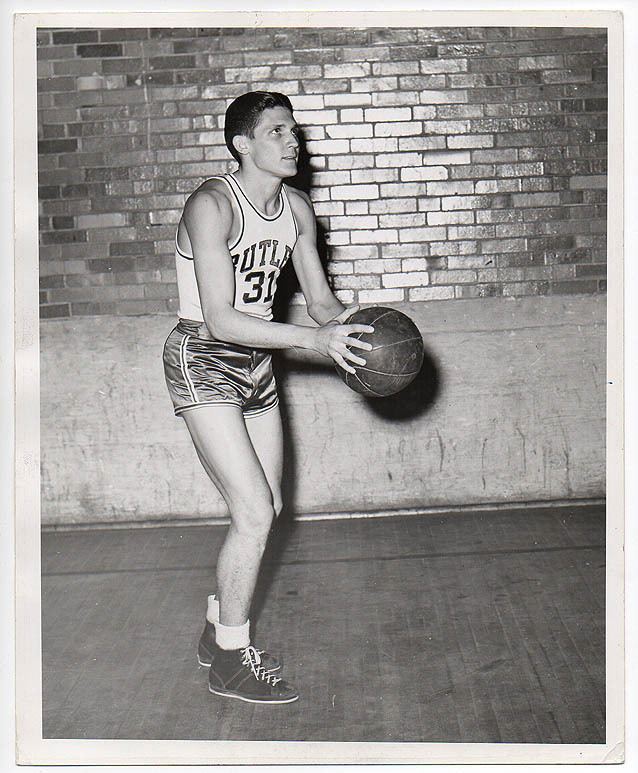
both Butler and at Great Lakes.
Butler University Athletics
At 8:15 that evening, the Arsenal Technical High School gym (Butler Fieldhouse being occupied by the Navy) was packed with 3,500 spectators—likely many conflicted by which cage team to cheer for or against. The Butler boys on the Bluejackets team? The current Bulldogs? Both? Frank “Pop” Hedden who had both played and coached under Hinkle, was now in charge and had 10 players at his disposal of which just six had been on the roster for the previous game—but only three had scored, for a grand total of 4 points.
The Bulldogs scored first with Glenn “Big G” Miller working the ball through the hoop. Both teams counterpunched, trading leads, and halfway through the first session the score stood Sailers 8, Bulldogs 7. Then the Sailors connected on a flurry of shots and by intermission Hinkle’s squad held a 19-10 advantage. The Bulldogs scored just two baskets, the other points tallied from the charity stripe.
Again, Pop Hedden’s bunch scored the first basket of the half. But the Bluejackets scored twice more—score 23-12 in their favor. The Bulldogs came back with two baskets, narrowing the gap, but never getting closer than the 7 point deficit after the first basket of the second half. As The Butler Collegian reported, “After the intermission, the sailors opened up with both barrels…”.
“George Sobeck, another Hoosier and former Notre Dame flash, hit four straight before missing. Wilbur Schumacher, who needs no introduction, hit two of his famous shots from the side out of two attempts. Bob Davies, from Seton Hall, after going scoreless in the first half and missing once from the floor and foul line in the second period, connected with two longs and two free throws in the last ten minutes”.
It didn’t help that the Bulldog’s Glenn Miller fouled out halfway through the second period finishing with a game high 12 points. And that all twelve players for the Bluejackets scored with Frosty Sprowl and Glamack racking up a team best 10 points apiece. Deitz and Schumacher, the Bulldogs turned Bluejackets, each scored 4 points.
When the final gun sounded, Tony Hinkle’s netmen held a 59-34 victory. The next day’s headline in the Indianapolis Star read “Great Lakes Downs Butler” with a sub headline declaring “Crowd of 3,500 Looks On As Sailors Stage Torrid Second-Half Drive to Pull Away”.
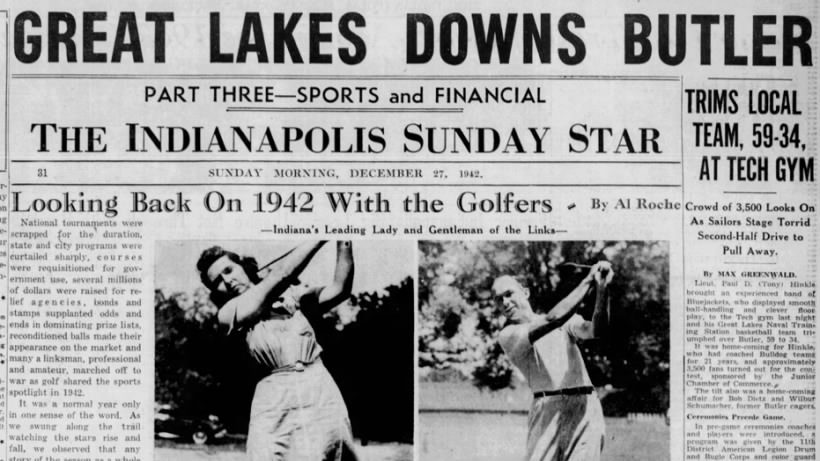
The Indianapolis Star
An article the next day in The Indianapolis News summed up the Bulldogs play this way:
“As a team Butler did not please Coach Hedden. He likes to have his boys keep themselves and the ball moving, but whether they did not choose to run and were afraid to pass, fearing interception, or simply couldn’t run and didn’t see anybody to pass to wasn’t clear. They were a bit on the flat-footed side but after all the Great Lakes defense wasn’t tissue paper, either.”
It was the proverbial matchup of boys vs. men. Hinkle’s Bluejacket team was stacked with talent, or as the Butler Collegian headline pronounced, “The Sailors put on All American Exhibition”. Emphasis on All American.
Robert “Bob” Dietz Family collection
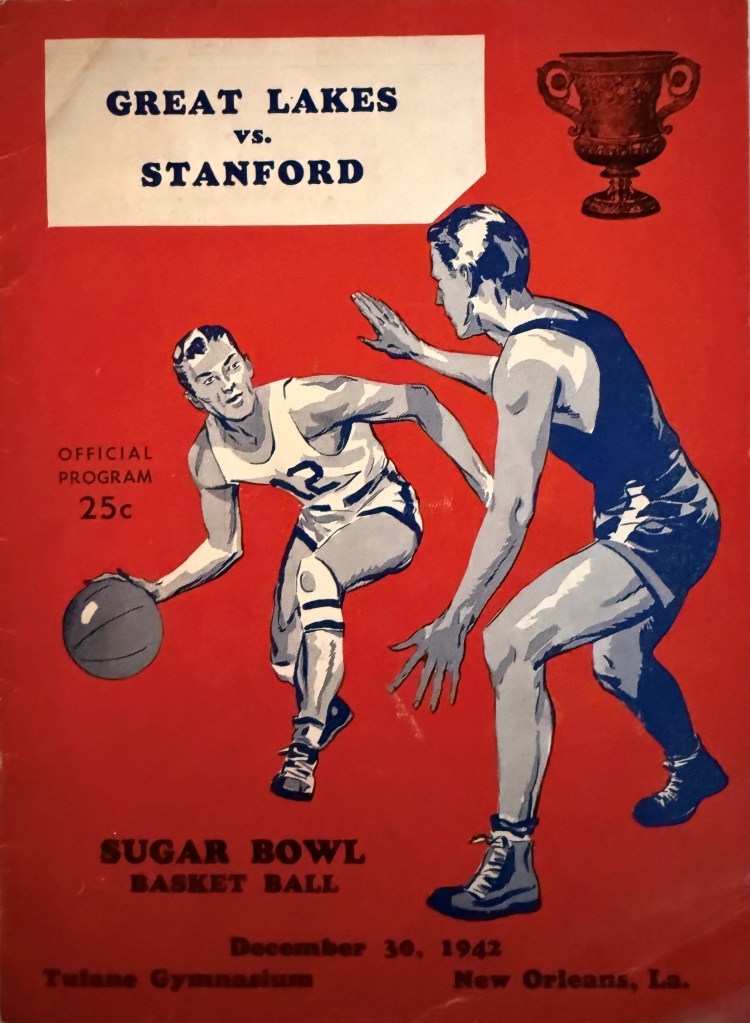
There were no public post-game comments by either coach, so it’s difficult to know what Tony Hinkle thought about facing Pop Hedden’s bunch. Both squads had new foes to prepare for—The Bluejackets heading to Louisiana to play Stanford in the Sugar Bowl tilt on December 30th. The Sailors continued their winning ways there defeating Stanford, the reigning NCAA champs, by a score of 57-41.
Meanwhile, Butler faced Indiana University at the Tech gym on January 4th.. Despite holding the undefeated Crimsonites to 13 points below their average, the Bulldogs could only tally 27 points. Final score: IU 42, Butler 27.
Coach Hinkle continued to coach the Bluejacket teams, eventually serving as Lt. Commander of Athletics at the Great Lakes. In late 1943 he was assigned to sea duty, overseeing sports and recreation in Guam to wrap up his service.
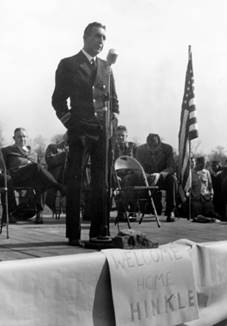
after his three and a half year service in the
U.S. Navy ends in November,1945.
Butler University Archives
In late October, 1945, word came that Hinkle would shortly be discharged and returned home. At a quickly arranged celebration on November 2, Butler students, faculty and other well-wishers gathered on the green in front of Jordan Hall on Butler’s campus. On a hastily erected stage draped with American flags and festooned with a banner reading, “Welcome Home Hinkle”, hundreds greeted the greatly missed Butler coach. The Indianapolis Star reported on the rally, saying Hinkle “urged the student body to renew Butler’s old-time traditions now that the war is over.”
And true to Coach Hinkle’s parting words three and a half years earlier–“And when it’s over, I’ll jump right back to Butler”– he did just that. Retiring in 1970 at the age of 70, Hinkle stayed on in an honorary role at Butler, a quiet and steadying presence in the Fieldhouse that paid homage to his legacy.
And never once, did he coach against his Bulldogs again.
The Indianapolis Star
(*#1) Especially in basketball, Hinkle scheduled all comers in the non conference, adding as many Big Ten and national powerhouses that the Bulldogs could visit—or even better, that he could lure to Butler Fieldhouse. And it was often at the Fieldhouse that the Bulldogs and Hinkle earned the nickname of “Giant Killers”, using solid fundamentals and Tony’s savvy coaching to knock off the big conference teams.
(*#2) The timing for Hinkle’s departure made sense. Just a short 3 months after Hinkle departed for the Navy, the Navy came to Butler. A Signal Corps school encamped at Butler Fieldhouse and the surrounding sports fields became the primary training grounds. After the Navy departed, the Army established the 52nd College Training Detachment, taking up residence in 1943 with 400 men over the next 16 months.
(*#3) Butler athletics were trimmed back due to a smaller pool of available male students and a lack of facilities at their disposal. Football continued in ’42 and ’43, and basketball struggled along during those years but had to play at Arsenal Tech High School—which lengthened its court from 76 to 90 feet, using portable baskets on loan from Butler. Baseball, football, basketball, track, tennis, and cross country all took a hiatus in 1944. In Fall of 1945, sports returned to the Fairview campus.
-With thanks to Kyle Stearns, Butler University Archivist for his expertise and support-
 Historic Hinkle Fieldhouse